



The Make-A-Wish Foundation is a locally-driven, community-based
organization with 80 chapters around the country and
25,000 volunteers dedicated to their cause. The spirit
of these tireless workers is infectious, as any attendee
at their annual conference will see. When you are talking
about giving kids with life threatening medical conditions
their greatest wish, it is not difficult to get energized.
From a PSA distribution standpoint, MAWF’s chapters
are community activists who play a very strong role
in deciding which media outlets get PSA materials. They
also make follow-up contacts to provide the all-important
local angle to the Make-A-Wish story. Our role was to
provide the media intelligence to them, along with other
tools to gain valuable media exposure.
When we began to correlate the local MAWF chapters to our
national database, we learned that the coverage area for each
MAWF chapter did not follow normal geographic breakouts such as
city, state, or zip code. This meant we had to create custom software
to match the zip code for each chapter with all the media outlets
in our master database.
These distribution reports are posted to the MAWF reporting
portal along with various kinds of information for local community
outreach staff, including how to access on-line lists, evaluation
methodology, and a primer on how to make contacts in the local
community which can be accessed at http://www.psaresearch.com/psaprimer.html.
Unquestionably local media outreach specialists, know
the media in their community better than we could ever
know them at the national level. Accordingly, we created
an online procedure that permits local chapters to change
their distribution lists in real time. If local chapters
have media contacts that are not on our list, they can
add them, or delete ones they do not want, along with
making contact changes such as shown below. They then
feed those changes to us via an automated email, so
we can create final distribution lists. Once the lists
are finalized, they can also export the data to an Excel
spreadsheet for further customization.

Another feature of our MAWF on-line distribution reports,
is that we provide “actionable” data for
each chapter. Rather than just posting distribution
lists, we provide a historical record of which stations
have and have not used MAW PSAs previously.
For example, we show the Previous Usage Index (PUI) for the
station, (the number of times that station has used other client
PSAs) and an indication if they are a current MAWF user or not. Complete
contact information for the outlet is also provided. With
this data, local chapter outreach staff can see very
quickly which media are or are not using their PSAs, and prioritize
those for contact.
The final – and very important – dimension
of Make-A-Wish TV PSA localization, is to create tags
for all 80 chapters, a daunting task, given the fact
that there are six different video tape format possibilities
for each of the chapters. This means there are 480 chances
for something to go wrong in terms of getting the correct
format to stations with the correct tag. However we
have done this for many clients and have a system that
works every time.
By adding tags to the end of a PSA, stations are more
inclined to use them because it adds a local touch,
and localism is very important to all media. We began
by developing an online procedure to permit chapters
to tell us if they wanted their PSAs localized or not,
and the information that was to appear on the tag. Using
this information, we then created a national tagging
worksheet which is used by the dub house to replicate
the correct quantity of tapes, in the correct tape format
and with the correct ending tag information.. Go to
http://www.goodwillcommunications.com/MWT02MAL2.pdf
to see a sample.
In some cases where local MAWF chapters have strong
working relationships with the media in their community,
they may want to deliver the PSAs personally. Again,
using an on-line procedure, local chapters can indicate
which stations they want to contact personally, and
how materials are to be delivered – to them or
to the station.
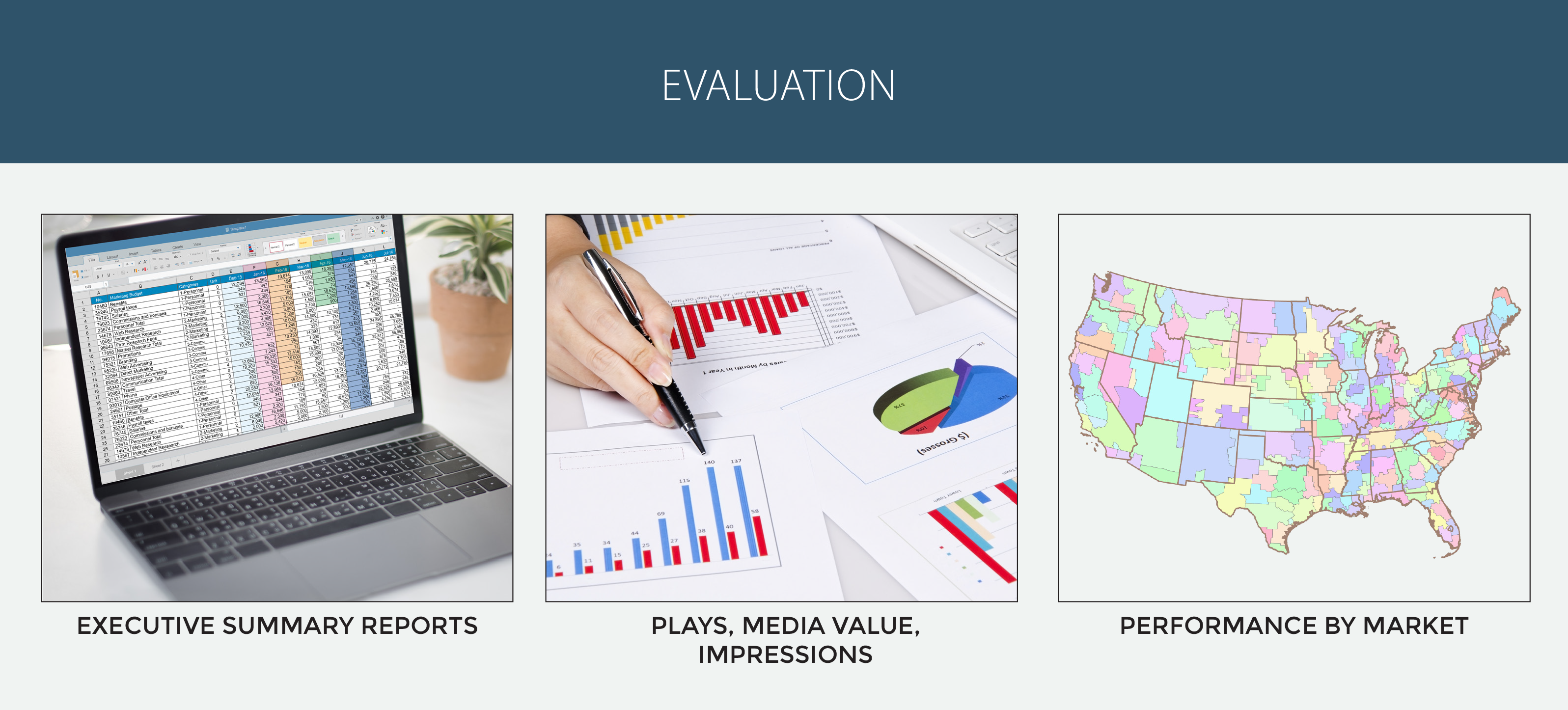
Evaluation reports for each chapter were posted to
the MAWF evaluation portal for access by local outreach
staff. Once they made local contacts they could then
see if the stations they contacted showed up on subsequent
evaluation reports. At the end of the campaign we also
produced lists of TV stations that have used other client
PSAs, but had not used MAWF materials.
In summary, most non-profits do not have such an extensive
network of high-energy chapters such as the one that
the Make-A-Wish Foundation has developed. However, in
the three years we worked with them, their campaigns
averaged $15MM per year, which set a new record in PSA
campaign attainment for any of our client campaigns.
The combination of a very important issue, solid distribution
procedures and motivated local chapters provided
this winning combination.

|